
Overdose death can be murder says Fairfax drug lawyer
Overdose death can be murder says Fairfax drug lawyer
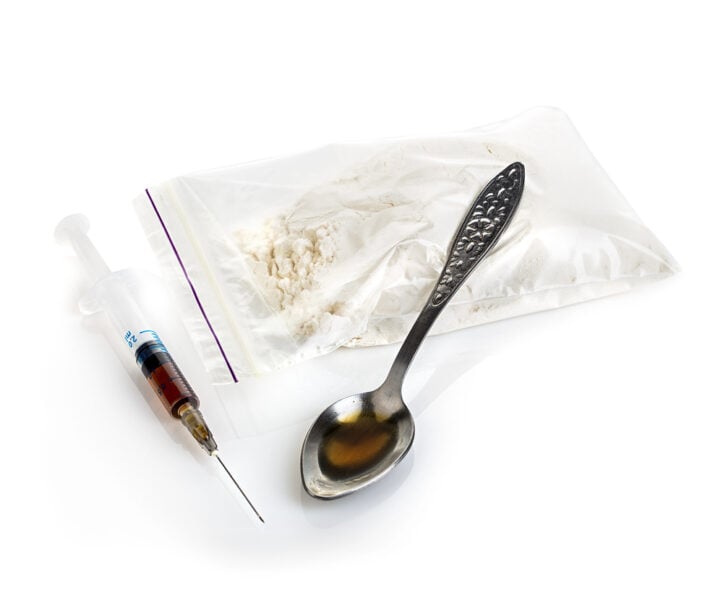
Overdose drug death can amount to second degree murder in Virginia, says Fairfax criminal lawyer
Overdose drug death is a risk in many instances, including when opiates are involved, when considering the prevalence and low price of the very dangerous drug Fentanyl. As a Fairfax criminal lawyer, I warn people to know that the “killing of one accidentally, contrary to the intention of the parties, while in the prosecution of some felonious act other than those specified in §§ 18.2-31 and 18.2-32 [together addressing designated types of homicide], is murder of the second degree and is punishable by confinement in a state correctional facility for not less than five years nor more than forty years.” Virginia Code § 18.2-33. The Virginia appellate courts make clear that injecting a person with a Schedule I or II drug that causes their death — and even preparing the drug for ready ingestion — is sufficient to be convicted under the foregoing second degree murder statute. That even includes circumstances where the decedent clearly, resolutely and voluntarily asks to receive the drug dosage. Belotti v. Commonwealth of Virginia, Record No. 0550-25-4 (Va. App. 2026) (unpublished).
When others warn that a deadly drug overdose will result, that can enhance the risk of a second degree murder conviction
The facts in the Belotti appellate opinion are very uncharitable to the defendant. and also are very tragic concerning the decedent with the overdose, who insisted on being shot up by a drug cocktail that included Fentanyl, despite the entreaties of a highly experienced opiate injecter directly to the purchasing decedent that his neophyte status with opioids placed him at high risk of being killed by this injection, especially considering its high quantity. The selling injecter and decedent proceeded as planned, nonetheless. In affirming Belotti’s conviction, the Virginia Court of Appeals underlined: “[T]he evidence before the jury permitted it to conclude that Belotti’s actions were ‘so willful and wanton, so heedless of foreseeable consequences, and so indifferent to the value of’ Lueker’s life that it supplied the element of malice… Not only did Belotti prepare the heroin and fentanyl mixture for Lueker, he also personally injected the drugs into Lueker. And he did so despite the entreaties of an experienced drug user who knew the mixture he had prepared was too strong for the inexperienced Lueker. Undeterred by Harmon’s grave warning that he ‘was going to kill his friend,’ Belotti persisted in conduct that was ‘heedless to [the] foreseeable consequences’ and evinced indifference ‘to the value of human life.'” Belotti (citations omitted).
Jurors and judges are not going to be charitable to people who cause death by administering illegal drugs to others
Jurors and judges are not going to be charitable to people who cause drug overdose death, particularly with Belotti, who injected the decedent with drugs even after being able to consider the urging of the present drug user both to Belotti and the decedent not to carry out the injection. On the one hand, Belotti’s sentence of forty years in prison with all but fifteen years and fife months suspended is below the midpoint of the maximum possible sentence he faced. On the other hand, he will be in prison a long time.
Trying to talk your way out of it with the police can end up digging a deeper hole for yourself
Even if not yet arrested nor told his right to remain silent under Miranda v. Arizona, 384 U.S. 436 (1966), he and everyone else had the right to remain silent with police. Instead he talked to police, denying an overdose and not helping himself: “Belotti told officers that he and Lueker had been ‘on a bit of a bender’ since Friday but decided to call it a night at 1:30 p.m. on Saturday. He went to his bedroom while Lueker slept on the living room floor. He claimed to have heard Lueker ‘snoring in that position’ at around 7:00 p.m., and it was not until 3:00 p.m. on Sunday that he found Lueker unresponsive and called the police. While he acknowledged that the pair had been drinking heavily, he repeatedly denied any drug use.” Despite Belotti’s denial of drug use, he had witnesses against him to the contrary, together with the testimony of a Virginia assistant chief medical examiner. Asserting your Constitutional Fifth and Sixth Amendment right to remain silent often can spell the difference between an arrest or not, a prosecution or not, a conviction or not, and the severity of your sentence if convicted.
Fairfax County, Virginia, criminal lawyer Jonathan Katz relentlessly pursues your best defense in court, regardless of how ugly the charges are or are not, regardless of how guilty you do or do not look, and regardless of whether you did or did not commit the alleged crime. Plenty of times, Jon Katz has obtained acquittals for people who appear to have committed crimes. Jon relishes obtaining as much justice as possible for his clients, regardless of how culpable they may or may not be, because doing so is his obligation as a lawyer, because each of his clients are humans deserving of no less a fight, and because the prosecution — not defense lawyers — have the role of seeking convictions. To secure your free in-person strictly confidential initial in-person consultation with Jon Katz about your court-pending prosecution for alleged Virginia DUI, felony or misdemeanor offense(s), contact us at 703-383-1100, Info@KatzJustice.com and (text) 571-406-7268.